
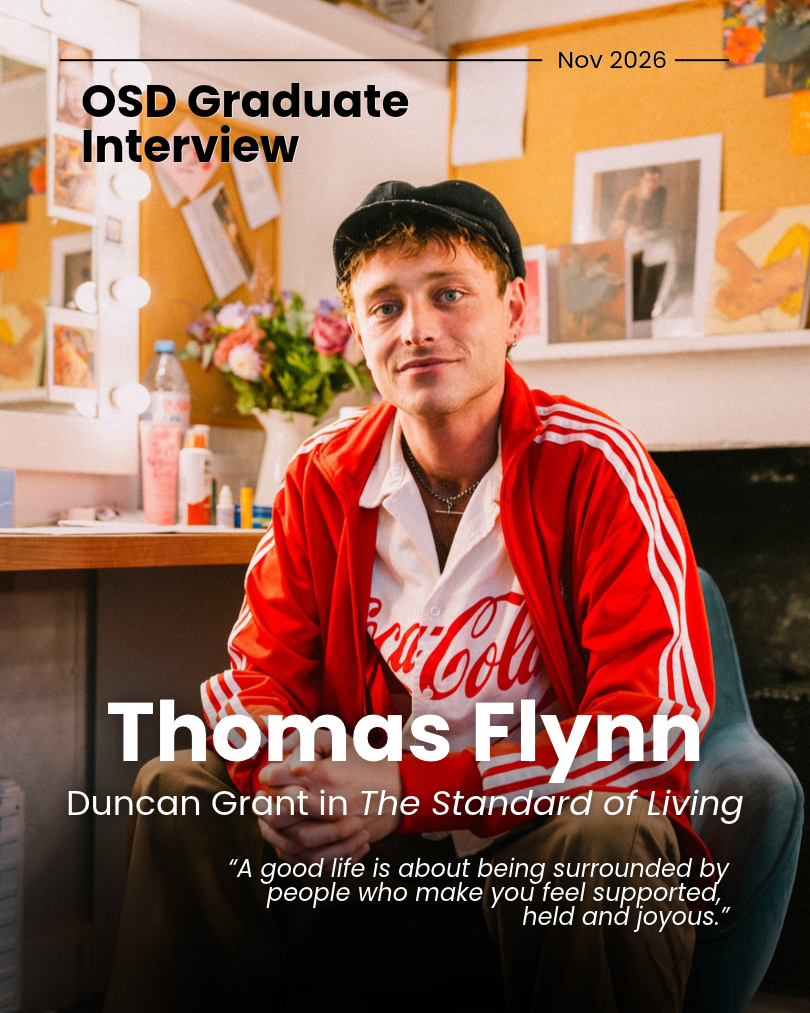
Thomas graduated from the Three Year Course in 2015. His credits include Red, White & Royal Blue, BBC’s Riot Women, Netflix’s Bridgerton, and Apple TV’s Masters of The Air.
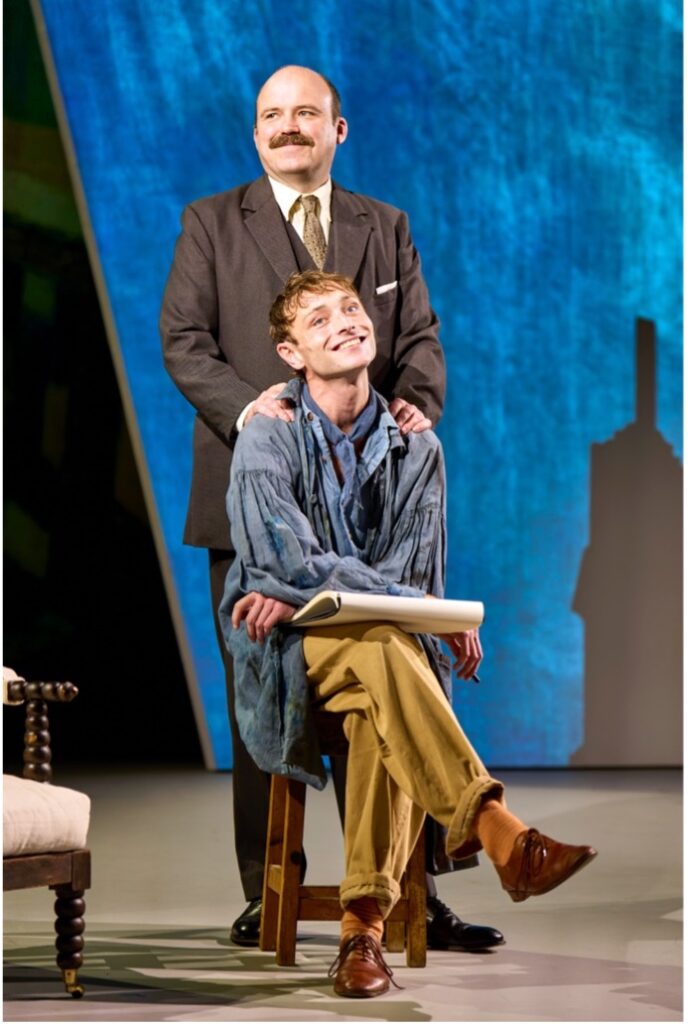
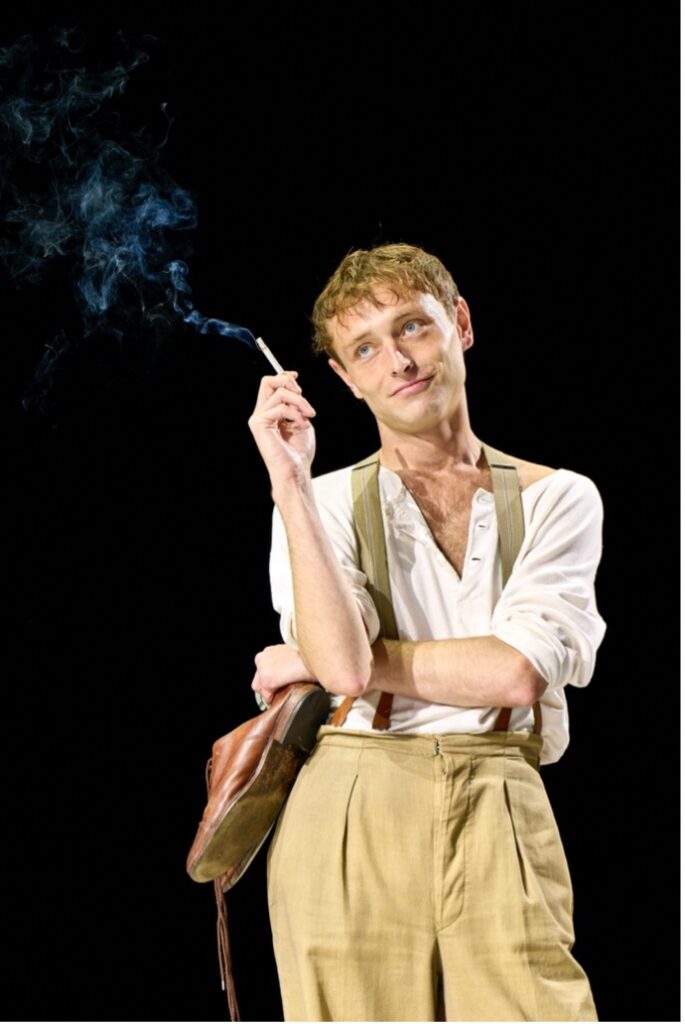
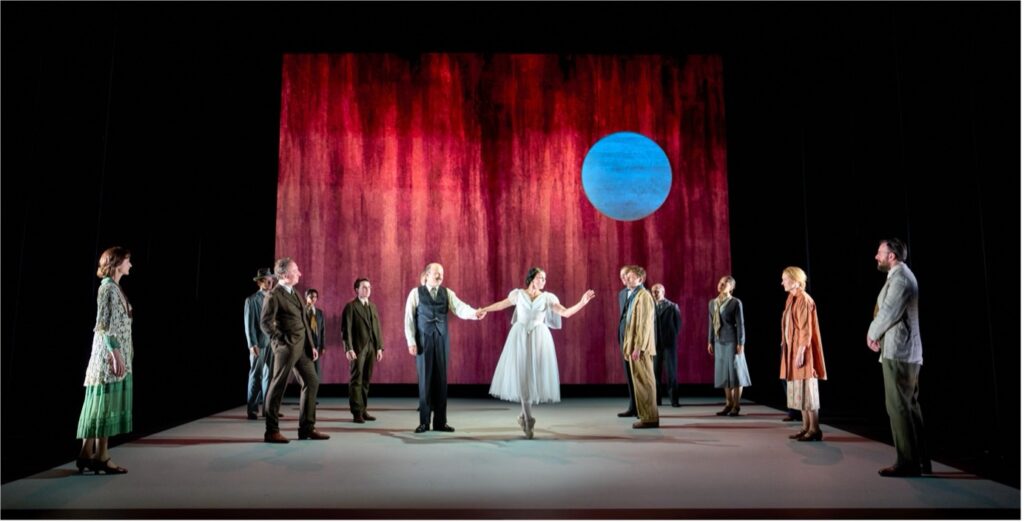
We recently caught up with Thomas to talk about playing Duncan Grant in The Standard of Living, his upcoming role in Red, White & Royal Wedding, as well as his time here at OSD.
By Omi Mantri
Interview edited for clarity and length
Firstly, congratulations on The Standard of Living How’s it going? How does it feel to make your West End debut?
It’s going very well. I’m really enjoying it! I’ve wanted to get back into theatre for such a long time. My last play was in 2018, I think, at the Old Red Lion, which is a 50-seat theatre, and it was written by someone in my year at drama school. So, this is a very different experience, nearly 10 years later.
I’ve been desperate to get back into theatre, but because I’ve been doing lots of film and TV, the opportunities that excited me haven’t really been there. Then this came along, and it exceeded all my expectations. To get to work with Nicholas Hytner, James Graham and Rory Kinnear at the Theatre Royal Haymarket, it doesn’t get better than that. It was a no-brainer.
What was the audition process like?
I was asked to do a three-day workshop for the play in June. It was mainly table work, giving James Graham the chance to hear it aloud. At the start, Nick Hytner said, “This is not an audition.” So, I relaxed into it, thinking I’d just try to do a good job.
At the end of the second day, as I was packing up my things, Nick pulled me aside and offered me the part. My knees buckled. I couldn’t tell anyone until the following day, so I spent the evening wondering if it had all been a mirage!
When he offered me the part, he also told me I had to speak to Jonathan Bailey. I know Johnny a little, but we’re not close. We’d both done Bridgerton, although we didn’t have any scenes together, and we’d met at parties and hung out at Glastonbury. Nick had worked with him on Richard II and asked if he knew anyone who might be right for the role. Johnny recommended me for the workshop, which was so lovely.
It was such a mad and beautiful way to get the role. When I got into rehearsals, though, the imposter syndrome was ten times higher because I felt like I hadn’t actually proved I was worthy of getting the part. I think it’s a lesson in always being nice and being someone people want to work with.
Wonderful advice. You play the role of Duncan Grant, a real life Scottish painter and designer. How did you prepare for the role, and were there any pressures of playing a real life person?
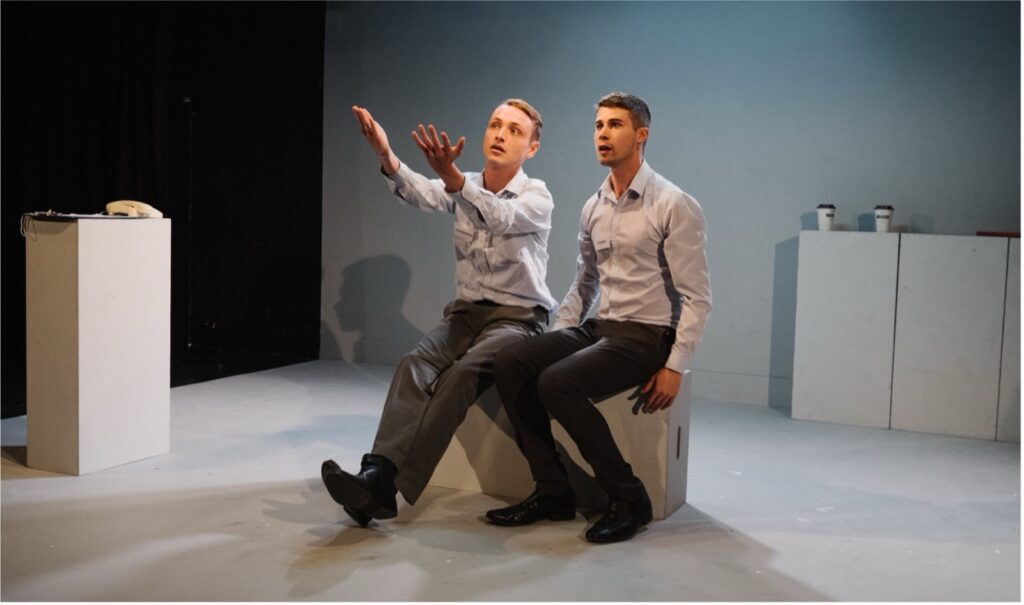
Playing a real-life person has always been number one on my acting bucket list, so to get to do that and return to theatre at the same time was amazing. I didn’t know much about Duncan, beyond his name being associated with the Bloomsbury Group, but I completely fell in love with him.
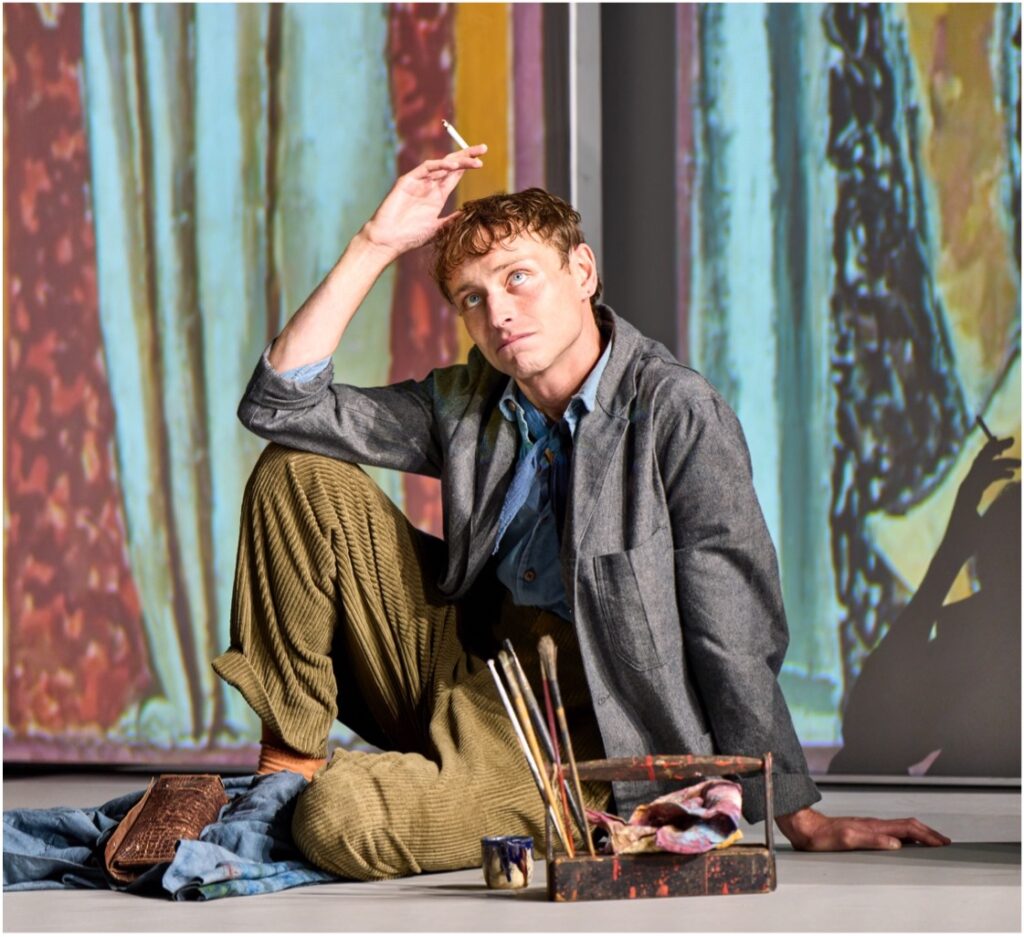
I had about 10 days to prepare for the workshop, so I did lots of research. I read his autobiography, listened to the few recordings of him speaking, and looked through letters, biographies and his artwork. I also visited his house, which is now open to the public, and went through the archives at the Tate and King’s College, Cambridge. Seeing his diaries and artwork up close was lovely. You could even see his thumbprint on some of the paintings.
I didn’t feel too much pressure to fully become him because there’s not a huge amount of footage to go off, so I still had the creative freedom to make my own choices. I really liked him, and I could see why I’d been cast because we look a bit alike and have quite a similar energy.
Without giving too much away, is there a particular scene that you really look forward to performing every night?
*Spoilers*
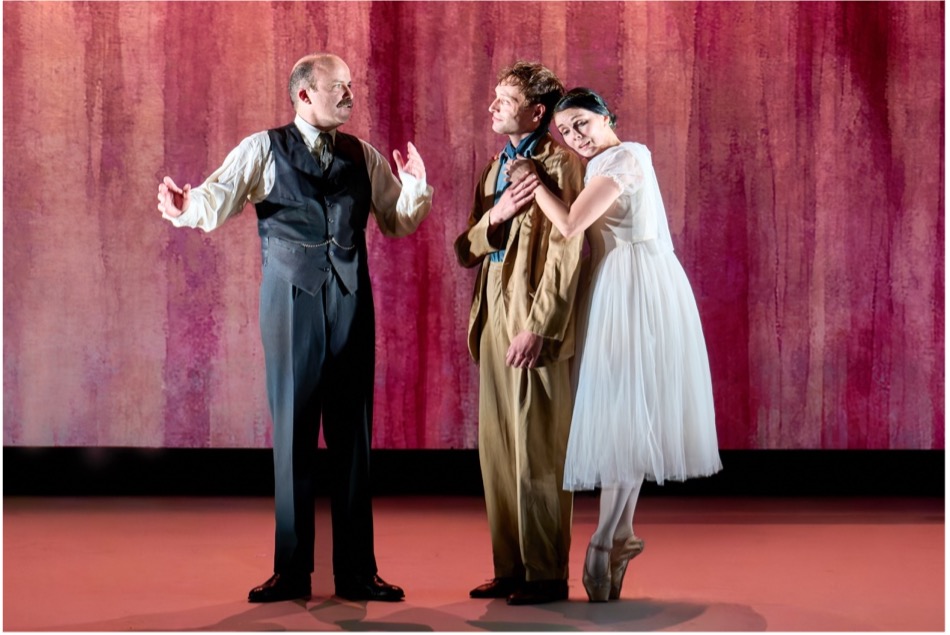
There’s a scene early on where Duncan Grant has to tell John Maynard Keynes, who he’s been lovers with, that he’s not the one for him. Everyone was drawn to Duncan. He had this sort of ethereal presence where he was kind and funny, but he was impossible to possess. He was a true bohemian, I think, out of the Bloomsbury Group.
It’s quite a vulnerable moment, where Duncan has to confront something rather than put his head in the sand. I also really enjoy finding those qualities in him as he gets older. He was always impish, cheeky, gentle and soft, and it’s been lovely exploring how those qualities develop over the course of his life.
Was there a moment in rehearsals where something suddenly clicked for you?
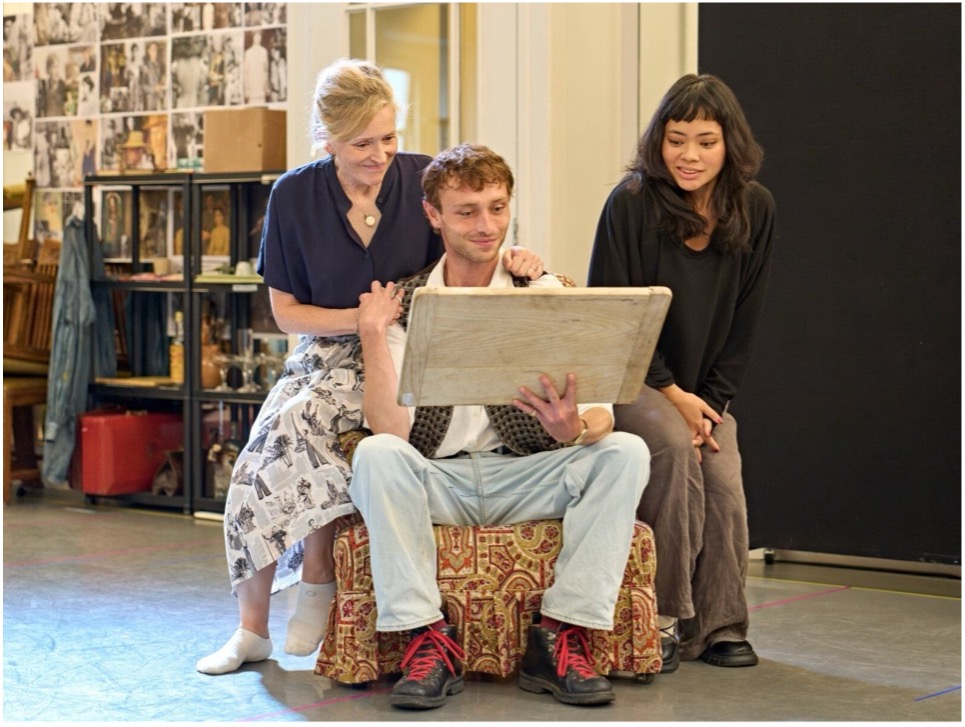
Costume fittings are always really lovely, and we had the most amazing costume designer, Jenny Beavan, on this. She’s won three Oscars, which is nuts, but she’s also the most wonderful woman in the world! I think what makes her so brilliant is that she’s an artist who knows how to tell a story with clothes.
We did our costume fittings at Cosprop, and I had six or seven fittings. You know quite quickly when something feels right or wrong. I had a few pairs of shoes to try on, but I asked if I could wear one particular pair because they just felt like Duncan to me. When I put them on, I thought, “That’s him.”
What’s it been like working with such a talented cast and creative team? What have you learned from working with them?
They’re not only brilliant actors, directors and writers, but also incredibly intelligent! And I really enjoy the intellectual side of breaking things down and chatting about the work.
Working with Nick Hytner was like watching someone compose a painting. He would hone in on tiny details, and I’d wonder why he was focusing on those when there were bigger moments to work on. But he was bringing all the elements together. I think what makes him such a brilliant director is that he surrounds himself with the best people and trusts them to do their jobs.
Rory is like watching a master at work. His ability with language and his intelligence are incredible. Text is always the first thing I focus on when building a character, and with a play written by James Graham, the writing is so beautiful. Watching Rory work with it was incredible. It’s also been inspiring to watch theatre veterans like Claire Price and Naomi Frederick at work.
James Graham is a living legend. He has this amazing ability to take huge ideas or historical events and turn them into something human. He told me his first play was about the Suez Canal crisis, which he took to Edinburgh while at university and which received five-star reviews across the board. I think that’s what sets him apart and makes him one of the greats. He has this amazing ability to take huge, lofty, ideas or events and turn them into something that is human.
You’ve worked extensively in film and TV over the past few years. Has that experience changed the way you approach acting on stage, and what do you enjoy about the differences between the two?
Acting for film and TV is often a test of perseverance. I was doing a big-budget film before this, with huge sets and lots of supporting artists, and we’d spend three days shooting half a page. You might say a line 80 times across all the different setups, so it becomes about maintaining your energy.
Coming back to theatre, I’d completely forgotten what it’s like to act for two hours straight, immersing yourself in a world for an extended period. I love acting, and theatre gives you that opportunity in such a beautiful way. Without sounding too cheesy, it felt like coming home.
Talking about screen, you’ll soon be returning as Prince Phillip in Red, White & Royal Wedding. What was it like revisiting the character after several years? Do you try to replicate what you did before or allow your experiences and how you have evolved over the years to come through?
I loved revisiting that character. I’d never done a sequel or returned to the same character before, and what I loved creatively was that, with the first film, you’re still trying things out and dealing with imposter syndrome, wondering whether your choices are right or whether audiences will like you.
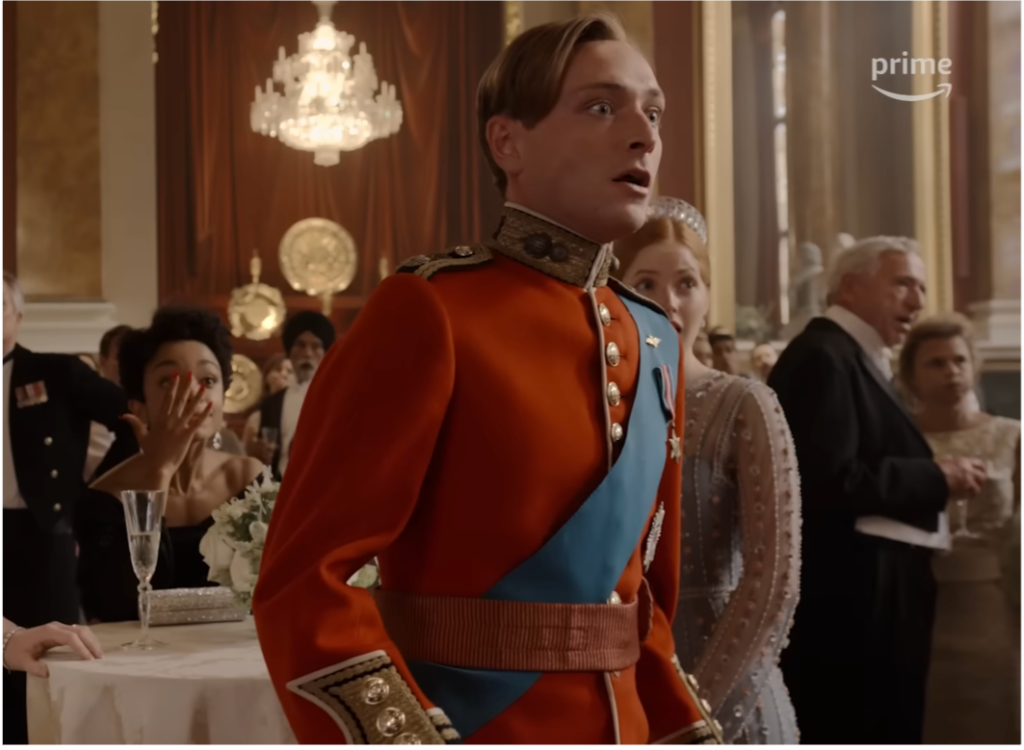
With Red, White & Royal Blue, the book already had such a huge fan base, which I hadn’t fully realised until we were shooting. You really want to do those characters justice for the people who love them. When we came back to Red, White & Royal Wedding a few years later, all that noise in my head had gone because I’d already played the character and it had worked. I could just slip back into it and focus on having fun.
The first day was surreal. We were doing a camera test and the director had us improvising, and I couldn’t remember the other characters’ names! I also had my terrible wig back on, playing the heir to the throne, which is so far removed from me. But I loved how comfortable and supported I felt. I could make choices, be silly, go too big or too small, and just play.
Have you always been interested in acting? What role did Oldham Theatre Workshop play in your journey?
I was about six or seven when I was put into a six-week summer acting programme at Oldham Theatre Workshop, and from then on, it became my second home. Acting was all I wanted to do. Growing up in Oldham, where there wasn’t much funding for the arts, it was a place where I felt I belonged. I made my best friends there, and we’re still close now. We called ourselves the Four Musketeers: me, Olivia, Emily and Sam.
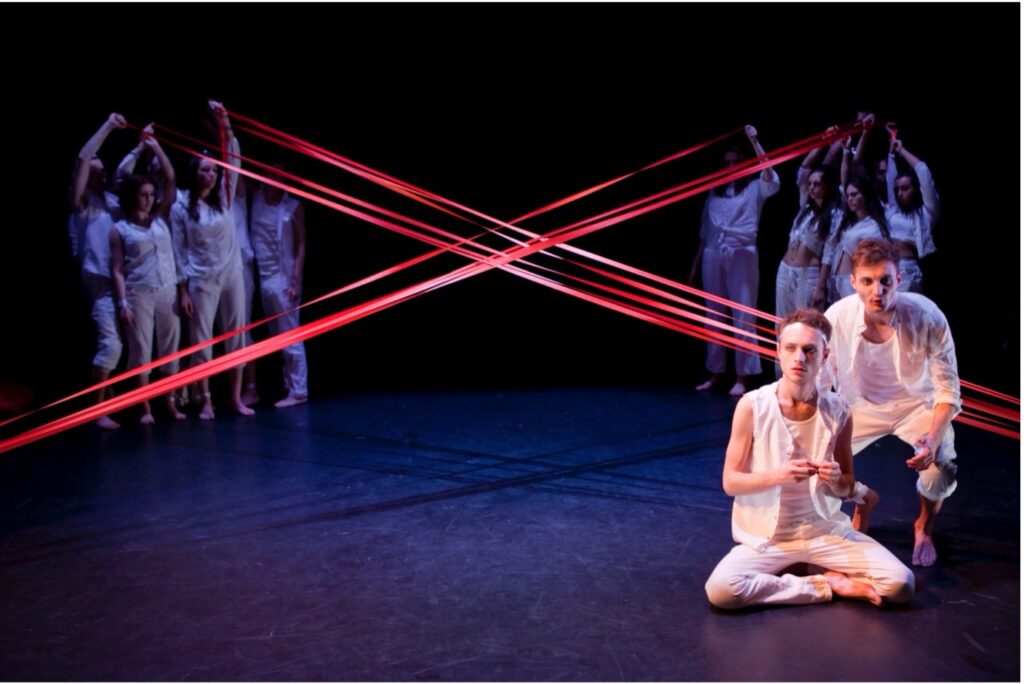
James and Sarah, who ran it, were like second parents to me. I learned discipline and stagecraft, but more importantly, I learned about myself. It was a safe place for kids who felt a little different, who might be too loud at school or sit outside what was considered normal, to be themselves and find their people. I think places like that are incredibly important. I absolutely love Oldham Theatre Workshop. Those were some of the most formative years of my life.
Was there a particular moment in your life that you decided to pursue acting as a career?
I think when I was about 15 or 16, choosing my GCSEs and A levels, I knew drama school was the plan. I did all my research, and by the time I left sixth form, I knew that’s what I wanted to do.
And what was the process like for choosing OSD?
It was actually a really lovely, funny series of events! My best friend, Emily Stott (Three Year Course 2015), was doing the Foundation Course at OSD, and I went to visit her during my gap year, after not getting into drama school the first time around. I ended up spending the weekend with her and Freddy Carter (Three Year Course 2015), and we became best friends almost immediately. I had such a great time in Oxford and loved the city, which felt very different from Oldham, where I’m from.
I hadn’t even really considered auditioning for OSD, but then Freddie and Emily both got onto the Three Year course, and I thought it felt like a sign. I auditioned on the very last day and got in too! It felt like the stars had aligned. I was going to drama school with my two best friends, and we ended up living together throughout the course. They’re still my best friends now.
That is as movie magic as it gets.
Yeah, literally felt like a Richard Curtis rom-com.
Looking back, was there a time at the school that was of particular significance?
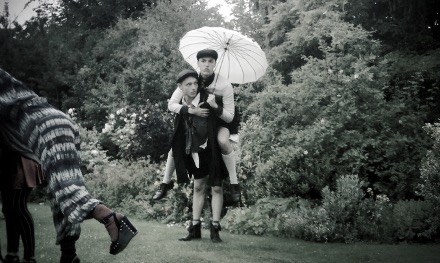
One of my favourite memories from OSD was working with visiting tutor Mia Soteriou in the second term of our first year. We’d spent the first term learning emotional recall, which was really tough, and then got to apply everything we’d learned to scene work. Mia was incredible. She was a working actress still active in the industry, so there was something particularly exciting about learning from someone who was doing what we all wanted to do. That was really inspiring.
Is there a lesson you learn at OSD that you keep coming back to in your acting career?
I think one of the biggest lessons was to stop letting fear get in the way of creativity. Some of the exercises we did in first year, like self-song and clowning, were some of the scariest and most vulnerable things I’ve ever done. But when you’re scared or embarrassed, it can really kill your creativity. At the end of the day, we’re just playing, like kids playing make-believe, and I think OSD taught me to stop getting in my own way and fully commit.
You also leave drama school with so many tools that it takes time to learn to trust them. You don’t have to apply everything you’ve learned to every performance. It’s all in your toolbox, and you learn to trust that it’ll come naturally when you need it.
How did you find transitioning from drama school to the industry?
It was incredibly difficult. I left OSD in 2015 without an agent, and I didn’t sign with one until 2019. I was struggling financially, and all I wanted to do was act, but it’s difficult to find work without an agent or contacts. So you have to start making your own work.
I made a short film with Anthony Greyley (Three Year Course 2013), which gave me some showreel material, and I was also in a play written by my friend Tom Ratcliffe (Three Year Course 2015). I invited 54 agents to see it, ranked in order of preference. Only four replied, and the two who said they’d come were numbers 1 and 54 on my list. I ended up getting offers from both, and number 1 was my dream agent. It took four years, but I got there by creating my own opportunities and putting myself out there.
What role does community play for you in this industry? You mentioned your former classmates, and you were part of the class of 2015 and the early days of Wildcard Theatre Company.
Community is everything to me, both in acting and in life. My friends are the love of my life, and most of them are actors. I really need people around me.
My year at OSD were amazing. We got on really well, worked hard and set up Wildcard Theatre Company. I wasn’t a core member because, after drama school, I felt I needed a bit of space to spread my wings, but I was so proud of everyone in my year who got involved. They became business people, marketing experts and directors, and they did it really successfully. People like Maimuna Memon, James Meteyard and Joey Dawson have gone on to do brilliant things, and they’re just a few examples.
I think my year set a really good example for other graduates: if the work isn’t there, make it yourself. And if you’re going to do it, do it well.
Off the back of that, how important is it for actors nowadays to create their own work?
If the work isn’t there and you’re not being offered it, what else can you do? You have to make your own work. Even Meryl Streep doesn’t act every single day of the year. No actor has a full-time acting job, so there are always gaps in between. Even if you’ve got all the money and prestige in the world, you still need purpose and something creative to do.
Most actors have turned their hobby into their job, so you need to find another outlet for that creativity. The difficulty with acting is that you can’t really do it by yourself. If you’re a singer, you can sing in your room or book gigs in a pub. If you’re a poet, you can publish your work online. But as an actor, you need other people to make something. So if the work isn’t there, you have to create it yourself. Otherwise, you don’t have an outlet for the thing you love.
Yourself and fellow castmate Laurie Kynaston are co-directors of an exciting new venture. Tell me about Hackney Self Tape Collective.
Laurie and I set up Hackney Self Tape Collective because we’re both doers, and waiting for the phone to ring can be really boring. I was already doing lots of self-tapes for myself and friends, so it felt like a natural place to start. We wanted to offer an affordable service that was also about community. We’ve since branched out into showreels, helping actors find scenes that suit them and showcase their strengths. We have a team of six or seven people, mostly actors, alongside directors and people who work in casting. One of our biggest priorities is making sure the person reading opposite you is really good, because that makes such a difference to your performance.
We’ve also started doing meet-ups and socials for actors who’ve moved to London and don’t know many people in the industry. I’m really proud that we’ve created something people genuinely love. We wanted to build the kind of community that would have been valuable to us when we first left drama school.
‘What is a good life?’ Is the one question that begins to consume John in The Standard of Living. So now I ask you, what is a good life to you?
A good life for me is about community, being surrounded by people who make you feel supported, held and joyous. It’s about being happy in your work, your friendships and your outlook, and not putting all your happiness into work, which I think is really important for actors.
I’m always happy for other people when they succeed, and I think that’s important. I’ve seen actor friends become jealous of other people’s success, and it’s driven some of them mad or even made them give up acting. Having a positive outlook and being the kind of person you want to spend time with, I think that’s a good life.
Quick fire Questions
-
Film or TV?
Film -
Film or Theatre?
Film -
Classical or Contemporary work?
Contemporary -
Bodycon or Voicecon?
Voicecon -
Favourite subject at OSD?
Acting -
Favourite project at OSD?
Scene Study with Mia Soteriou -
Self-tape or In person auditions?
In-person -
What’s your favourite accent to do?
Heightened RP -
What accent do you want to learn?
Welsh
A huge thank you to Thomas for chatting with us about his career so far and his time at The Oxford School of Drama. You can catch Thomas in The Standard of Living, playing at the Theatre Royal Haymarket until 12th December.