
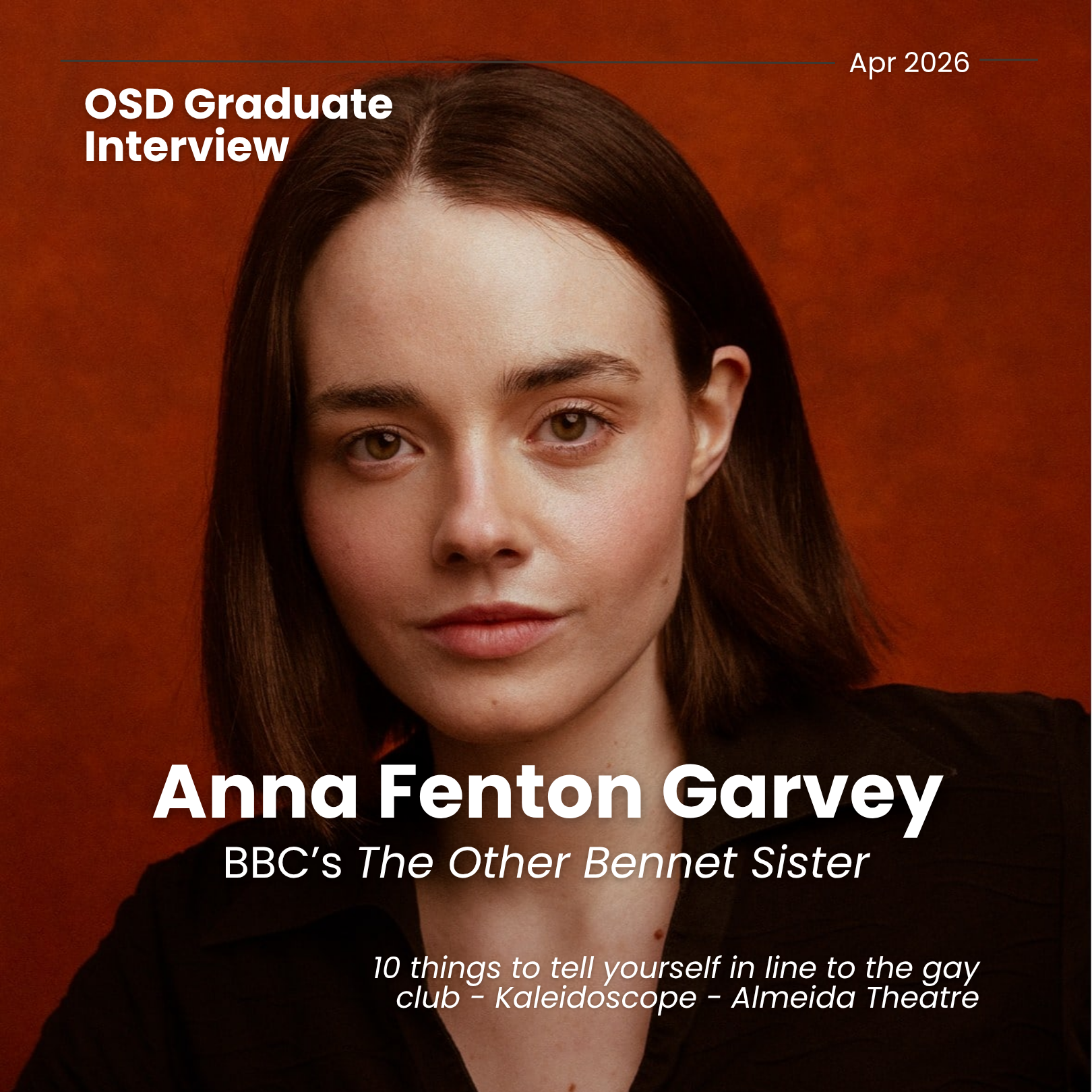
Anna is a queer British Irish writer, performer and drag artist who graduated from The Oxford School of Drama One Year Course in 2023. Their credits include The Nevers for HBO and Silos for BBC Radio 4.
We recently caught up with Anna to talk about their latest project, the BBC series The Other Bennet Sister (also starring OSD Grads Ella Bruccoleri and Tanya Reynolds), as well as their time here at the Oxford School of Drama (OSD).
By Omi Mantri
Interview edited for clarity and length
Congratulations on The Other Bennet Sister! How did the project first come your way? What was the audition process like?
I initially auditioned for the main character Mary, which was a really fun tape. Then got an in-person recall where, I met with John Pocock, the producer, and Kahleen Crawford, the casting director. Then I had another recall where I met the director, so it was kind of three rounds.
I later found out I wasn’t successful with Mary, which went to Ella, who is amazing and perfect for it. But then I got a call saying I’d got Charlotte, which was really exciting. They offered me the role off the back of my auditions. I guess they must have thought I’d be right for her based on how I approached Mary.
Can you tell us a bit about your character and what drew you to them? Had you read the book beforehand?
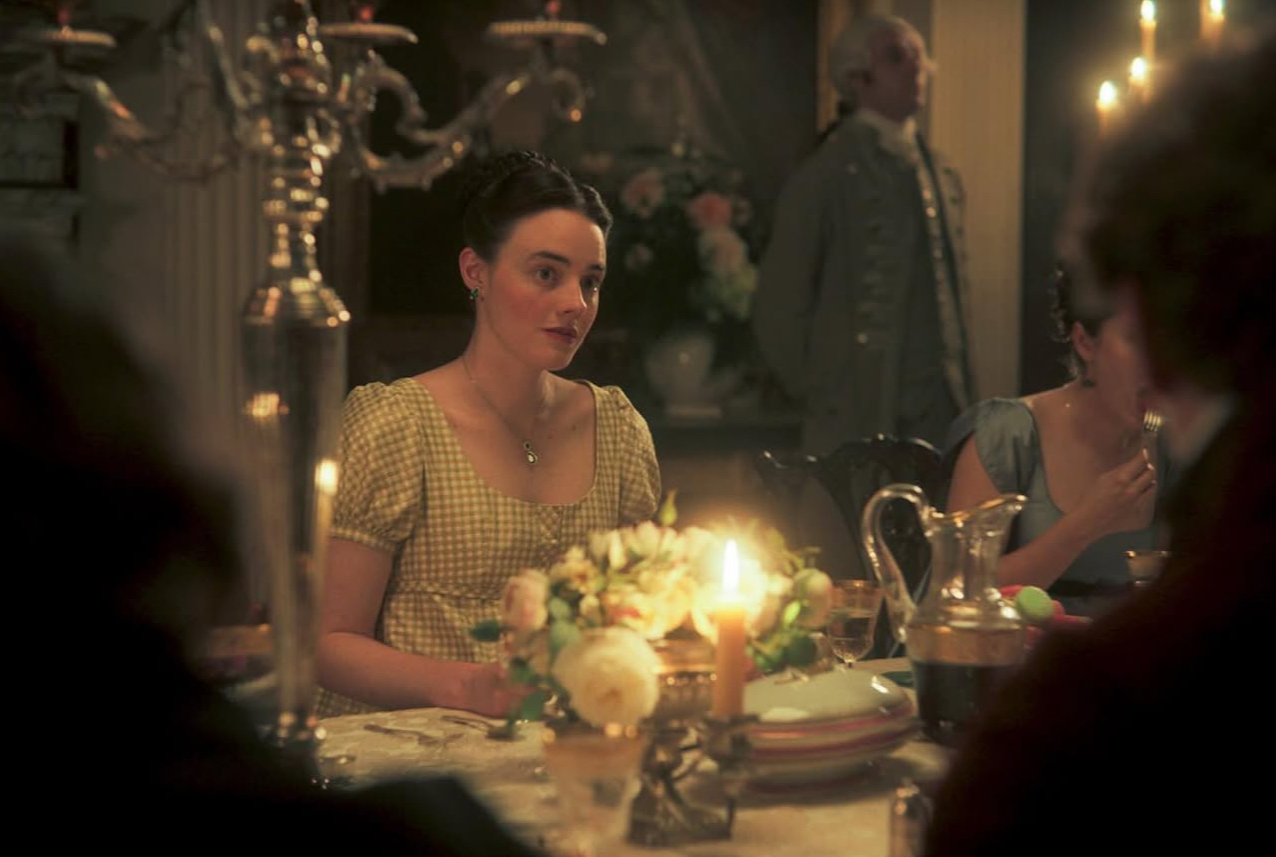
Yeah, I’d read The Other Bennet Sister for the audition, which really helped as it’s quite close to the book. Charlotte has quite a big storyline, and a lot of her pragmatism comes through in how she presents things to Mary in a friendly way, but with this very clear view that Mary should prioritise marriage for financial security. She’s got a very realist head on her, and I found a kind of humour in her straight talking that I was excited to play.
With Jennifer Sheridan, the director, we worked to carve out a Charlotte that felt different to other adaptations. She isn’t this vulnerable, unwanted woman, but she’s also not a villain who swoops in and steals Mr Collins. Instead, we found a middle ground where she’s Mary’s friend and very practical but ultimately has to do what’s best for herself.
We also talked a lot about her relationship to men as a kind of backstory. It doesn’t come through loads in the show, but the idea that she might be a bit indifferent to them helped, like that’s part of why she hasn’t had many proposals. It means her obstacle is trying to find a match without really wanting the romance of it, which feeds into how direct she is.
So, when she does take that opportunity, it doesn’t feel villainous, it just feels quite matter of fact. And ultimately, it’s Mary’s story, so everything we do is in service of her point of view, and what ends up on screen is shaped around that.
That’s a wonderful insight. What was your most memorable moment during filming The Other Bennet Sister?
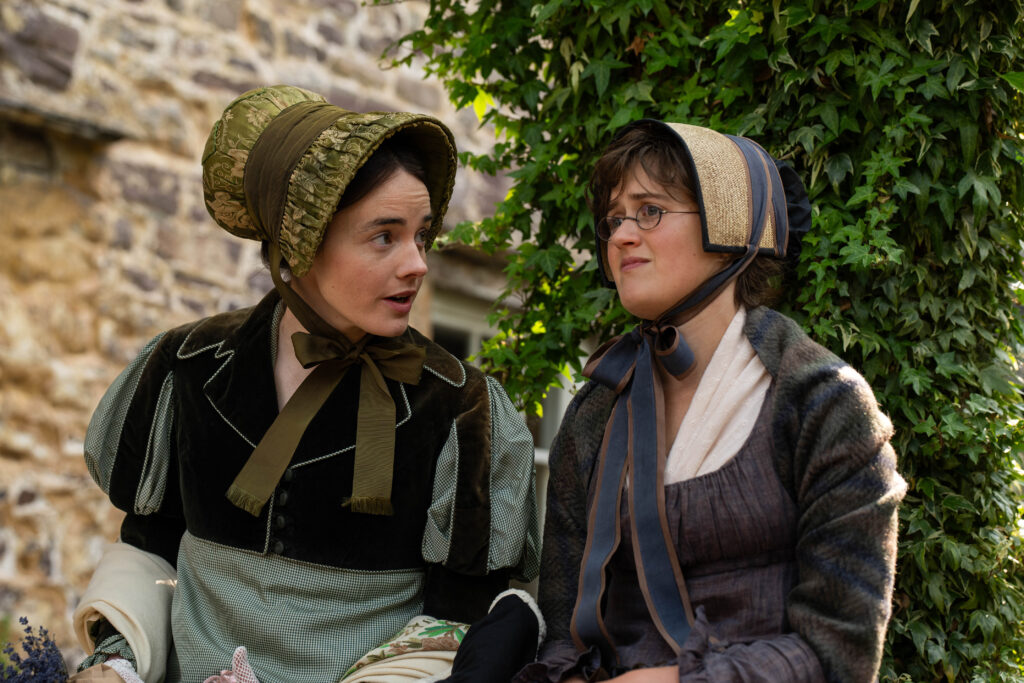
My most memorable moment was filming a ball scene in this big house. It was really sunny, and we were all outside having lunch on long trestle tables. I think because a lot of people had quite a lot of experience, I had to chill out a bit about how “pinch me” it all felt.
We were just sitting there having lunch and the cast were so nice, and I think that was probably my favourite moment. There were lots of fun moments acting, but those can go over your head a bit because you’re so in the zone, so having that time to pause at lunch was really special.
I guess like just off the back of that, what was your biggest takeaway from working on such a big budget set and with these amazing actors?
The main thing was realising you need to conserve your energy. I can be a bit like a puppy when there are lots of fun, interesting people around, and I definitely wore myself out a bit because the days are long, and you just want to chat all the time!
But you realise you have to pace yourself so you can show up properly in the work. It’s quite a practical takeaway, but not something you necessarily think about until you’re in it.
Jane Austin’s work is so well loved around the world. Did that bring any pressure for you and or did you just approach it freely?
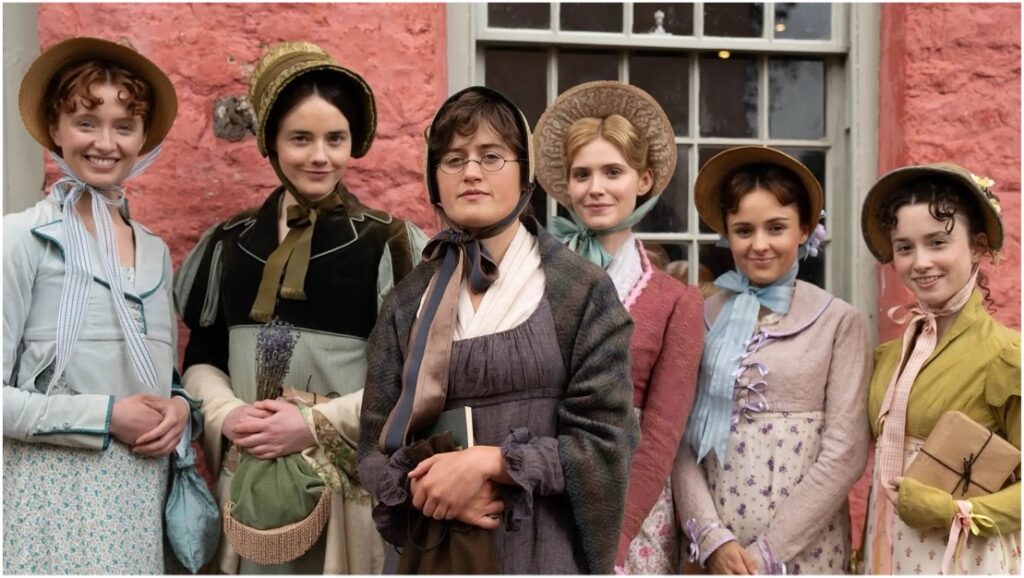
I think because I knew there’s another Pride and Prejudice coming out on Netflix, which looks amazing and has a great cast, and because this is a spin-off based on a really well-loved book, it already felt quite niche. Bad Wolf and Sarah Quintrell have worked so hard to bring that spin-off into a TV series, so I kind of trusted that.
I didn’t feel too much pressure. It was also my first job, so I tried to numb myself to any pressure because I knew it would affect how I worked. I think I work best when I feel quite at ease, so I just tried to have fun with it. Otherwise, what’s the point?
Oxford School of Drama grads Ella Bruccoleri and Tanya Reynolds are both part of the project. What was it like working with fellow OSD grads?
It was really nice working with both of them; they’re such great people. I didn’t get to spend as much time with Tanya, but she’s so fun, chill and great to talk to. She does such a good job as Caroline Bingley, playing that kind of mean role in a really endearing, quite infectious way. It feels very three dimensional, and I really look up to her approach to acting. She’s just a very genuine, easy person to get on with.
I spent a lot more time with Ella, obviously, and I really loved working with her. She brings such a unique, honest quality both on and off screen, and she’s just very genuine. In between takes we did a lot of singing and harmonising, which was lovely, especially as she had such a full-on schedule. Working with both of them was definitely a big highlight.
Have you always been interested in acting?
Yeah. I acted a lot as a kid, and I think my proudest moment was probably my Year 6 production. I carried on through my teenage years, but that’s also when all the self-consciousness and doubt kicked in. I went to a great Saturday drama school but there were agents there and there was an awareness of getting work. I started having doubts about my ability.
At Bristol University I did a lot of drama on a scholarship, but I mainly directed because it was so competitive. It made me realise you can’t just rely on supposed talent; you have to really work at it. After uni, I actually thought I’d go into directing and applied to the National Film and Television School, but I also applied to drama schools.
I’ve definitely been on a journey with it. I was probably more confident when I was younger, but I’ve realised how much it comes down to training and technique. I applied to OSD twice, and the second time I’d improved because I’d put the work in. It’s a tough journey, but you develop the craft, and that’s what gets you to a point where you can do a job like this.
What originally drew you to training at The Oxford School of Drama?
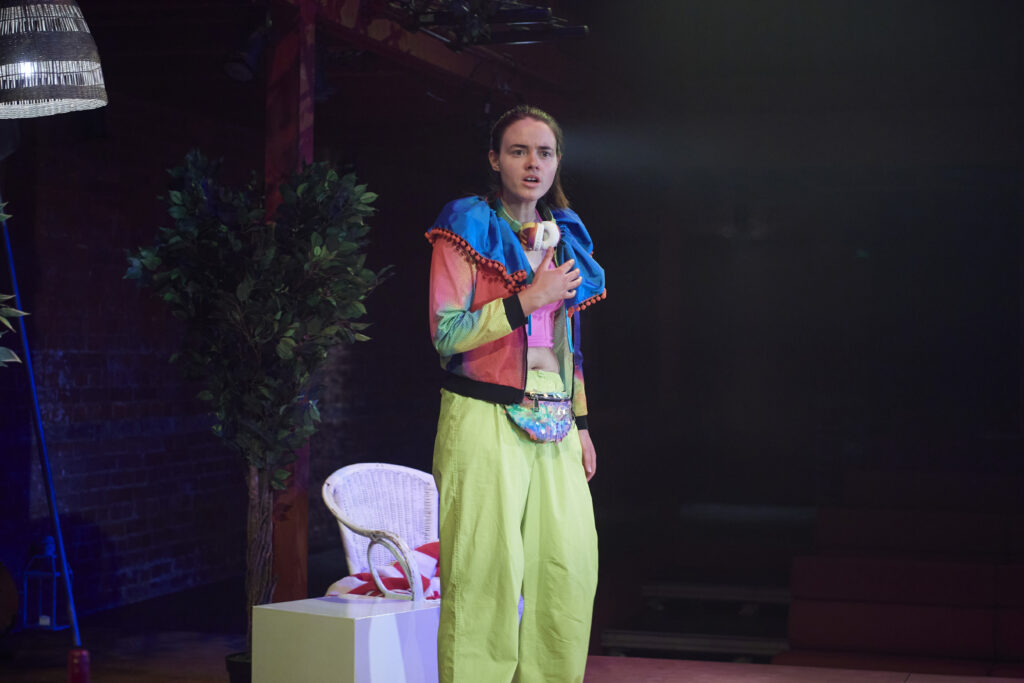
I had a friend who went there, Gráinne Dromgoole, and I’d seen her post about it on Instagram. It’s in the countryside, and at the time I thought ‘Ooo that seems really nice’. I also remember when I first applied, I liked how many recalls there were and how many different things they asked you to do. I had to send in a tape, then do things like a video pretending to be a bird or improv a scene. It felt like they were really sussing who I was, which made me think the training would be thorough.
When I applied again the next year, which is when I got in, I remember the recall and the way they ran the sessions made me feel like I really wanted to train there. It was the specificity of feedback and the way they worked with you.
Is there is there a particular moment or project from your time at OSD that really shaped you?
I found a lot of it quite hard and exposing, but in a good way. I probably was a bit whiny about it because it was scary. But I really enjoyed the accent tasks, choosing an accent, doing a verbatim piece from a real video, then a monologue in that accent. I liked the independence of that and being assessed on both the accent and the performance. It meant you explored lots of different types of characters, which I loved.
What do you think you took from OSD that you still rely on now in your work?
The main thing I’ve taken away is the Meisner work we did with Aileen Gonzalez, especially around substitution. It really helps me in in person auditions, because when you’re reading with someone you don’t know, you need to imagine they’re someone you do know so you can have a real connection. That way you’re already coming in with an emotion or opinion, rather than it feeling empty. That work on substitution is probably the most important thing for me. (Aileen Gonzalez directed On the Other Side of the War by Ed Hartland for their London Season)
Drama school can be intense, what did it teach you about yourself, not just as an actor but as a person?
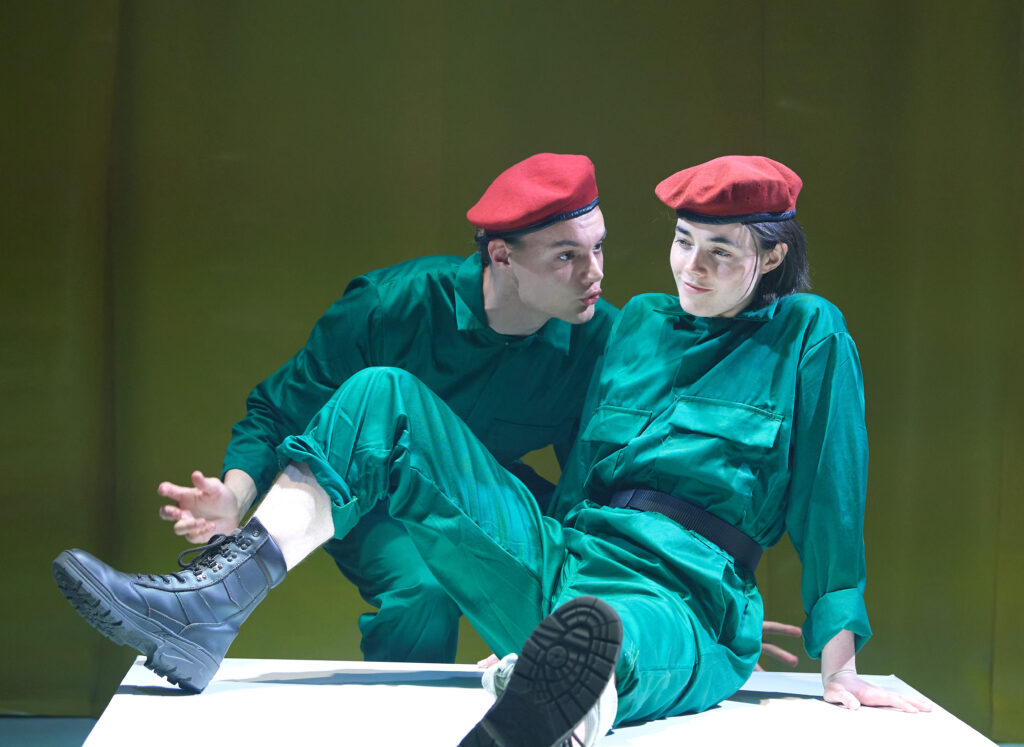
I think something I’m still working on is that you have more fun and gain more in life if you focus on improving rather than proving. That helped me as an actor, but also just generally. There were sessions where I could be quite resistant, usually because I was exposing something I needed to work on. For example, I struggled with stage acting and the physicality of it.
I only really improved when I accepted where I was at and treated everything as new information. That’s carried into my wider life and since leaving OSD, because you have to keep training. I still take more acting classes.
How did you find transitioning from drama school into the industry?
I found it hard, really hard. It’s not just leaving drama school, it’s also coming from Oxford which feels quite separate, and then suddenly all those life responsibilities come back. You’ve been in this bubble focusing on your craft, and then you enter a world where that thing is actually quite hard to access.
From speaking to people at other drama schools, it feels pretty universal. You go from doing it every day to struggling to find opportunities, and it takes a while to adjust. I was probably a bit stubborn about admitting that, but I realised you feel so much better when you focus on things you can make yourself. I’ve always written, and I was lucky to meet Barney [Doran] at OSD, we started writing together there and have kept that going since.
With acting, it’s just about doing as much as you can, classes, scratch nights, anything to keep working. It sounds obvious, but it’s true. I’m doing a scratch night tomorrow, and that kind of thing is invaluable for getting better. It’s tough, but accepting that and figuring out how to navigate life alongside acting is really important.
Talking about writing, you’re also a writer and you’ve worked on some fantastic projects for TV and theatre. Do you have any practical tips for new writers?
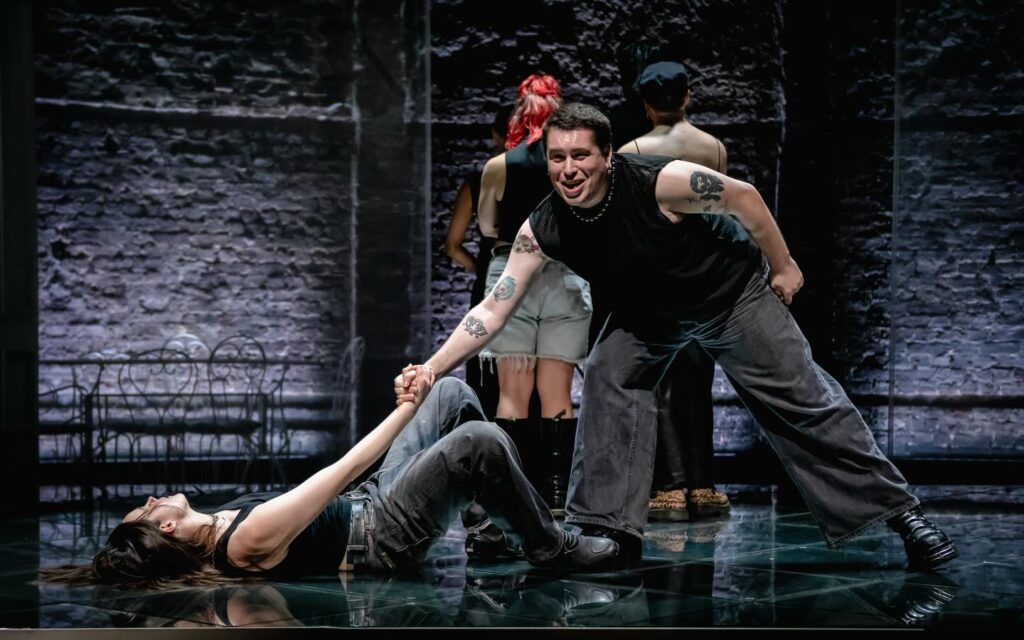
I’d say I’m still in my early years of writing, but for anyone who has an idea and hasn’t put pen to paper, a good place to start is your own life. Take a situation and just dial it up. Like in acting, we talk about raising the stakes. You can take something quite plain and quickly turn it into a story by pushing the circumstances further.
So if it’s a memory, like being 15 and your parents come home and catch you throwing a party, you can make it more dramatic by changing the conditions, like giving a parent something that heightens the situation. That’s where the drama comes from. And also, it sounds a bit obvious, but write what genuinely moves you. If you’re just writing for the sake of it, you won’t have the stamina. The best stuff comes when you’re actually motivated by the idea, and that’s the same for me and Barney when we write together.
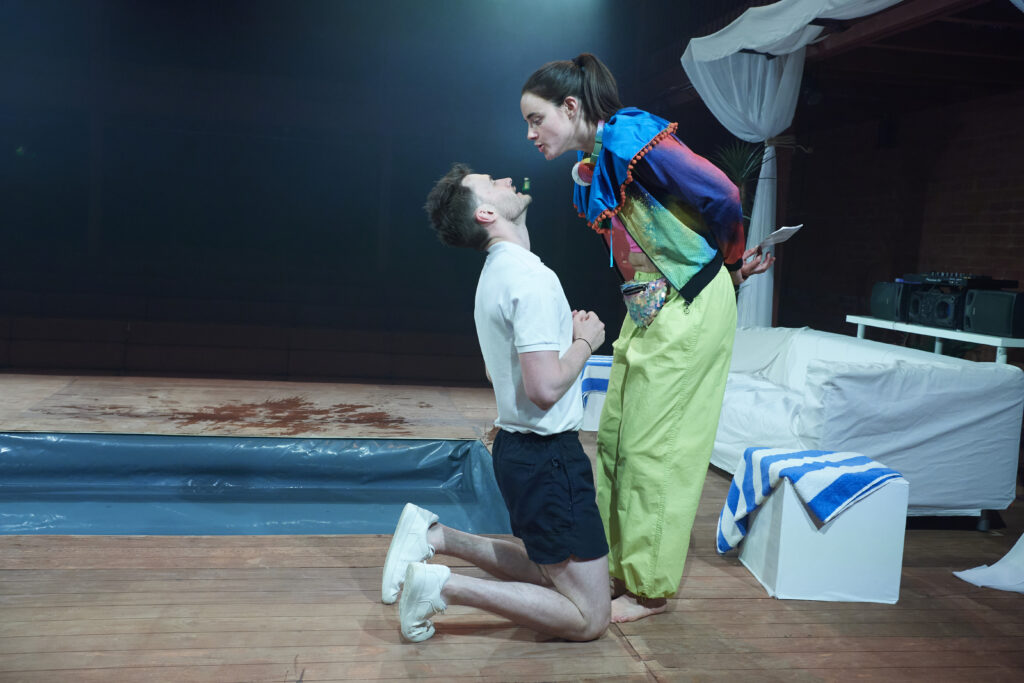
Talking about Barney, firstly, congrats on 10 Things to Tell Yourself in the Line to the Gay Club. Can you tell me more about Pound Puppy and your collaborations.
Pound Puppy is basically the name we’ve given to the work me and Barney make together. We started writing at drama school for our showcase, and that’s grown into a TV project and a number of things we’ve been developing. We tend to write things that are fun, interesting and queer, but feel new, not just focused on queer trauma, more about creating engaging characters, often duos like us.
We’ve recently had our first commission together, a musical called May Day, which will be on at the King’s Head Theatre in June. It’s been a big challenge but really exciting. It’s inspired by the trans exclusionary case around Hampstead Heath, so it has a strong political angle. We’re also continuing to perform our piece 10 Things to Tell Yourself in the Line to the Gay Club at scratch nights, which has been really fun. We work closely together, we have a similar sense of humour, and that makes the process feel very natural.
How important do you think it is for actors to create their own work today?
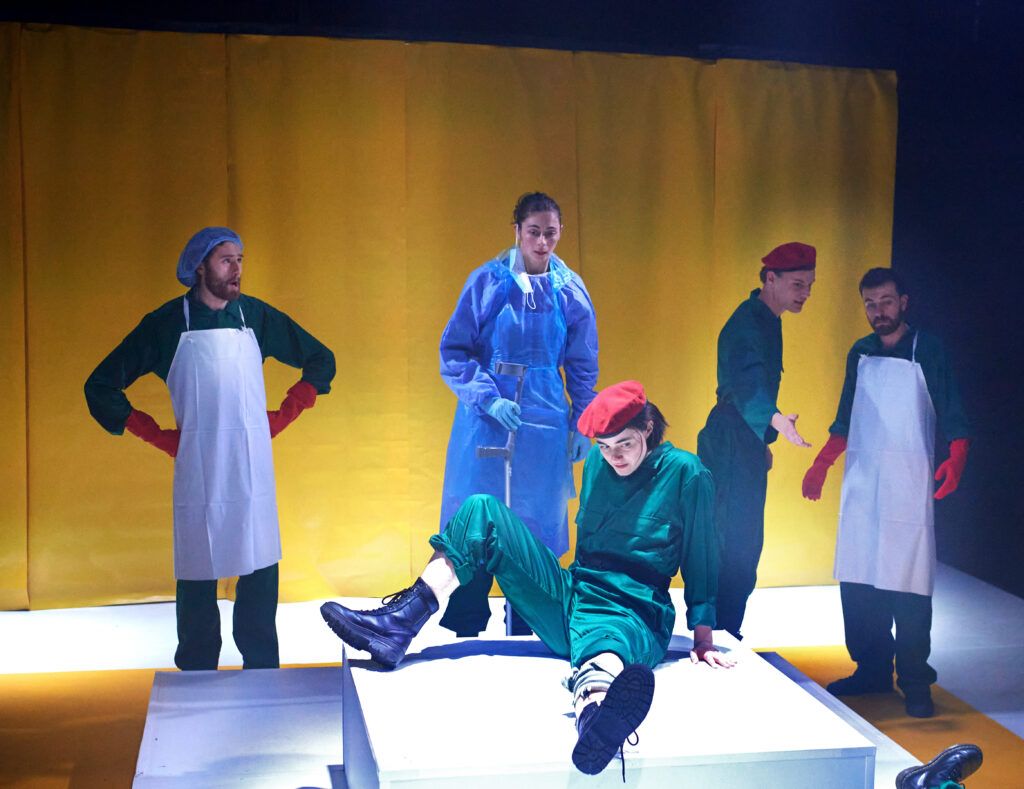
I think it is important, but not necessarily for everyone. Some people aren’t that into writing and are more interested in just acting, and that’s completely okay. But if you’ve got even an ounce of wanting to do more than just act and come up with something, you realise there’s actually a lot available to you because it doesn’t cost anything and you don’t have to audition for it.
I think acting can be really tough, especially after training when you’ve put in a lot of time, money and energy. When you’re not working, or not being paid to act, it’s easy to feel this kind of false sense of failure or like you’re stagnant. But the moment you start creating your own work, you remember you have it within you, which sounds obvious, but it’s true.
It also gives you something to focus on. You can’t sit there worrying about whether you’re getting auditions because you’ve got work to do. If you’re putting something in front of an audience, you have to prepare, and that takes time. It’s really about where you put your energy.
I guess to end the interview on one final open-ended question. Is there anything you want to say to the readers?
I think if it was to graduates. I would say it’s about holding two things at once. One is to keep a real sense of hope and expectation that you will do well, because that drives you to perform well. And have a positive relationship between you and your choices because they’re your choices and no one else can back them for you.
But at the same time, understand the nature of the industry. You can save yourself a lot of stress by recognising how it works. When you’re starting out, you’ll often be cast in roles that align quite closely with you. Understanding that can stop you feeling like the industry is against you. It makes sense that I was cast as Charlotte.
So, it’s about balancing those two things, having hope and motivation, while also being realistic about the industry and where you fit within it.
Quick fire Questions
-
Film or TV?
Film -
Film or Theatre?
Film -
Classical or Contemporary work?
Contemporary -
Bodycon or Voicecon?
Voicecon -
Favourite subject at OSD?
Accent Classes -
Favourite project at OSD?
Twelfth Night by William Shakespeare (Directed by Max Key) -
Self-tape or In person auditions?
In-person -
What’s your favourite accent to do?
Dublin -
What accent do you want to learn?
Scottish
A huge thank you to Anna for chatting with us about their career so far and their time at The Oxford School of Drama. If you’re interested in Anna’s work, you can follow @poundxpuppy and @annafg98 on Instagram.